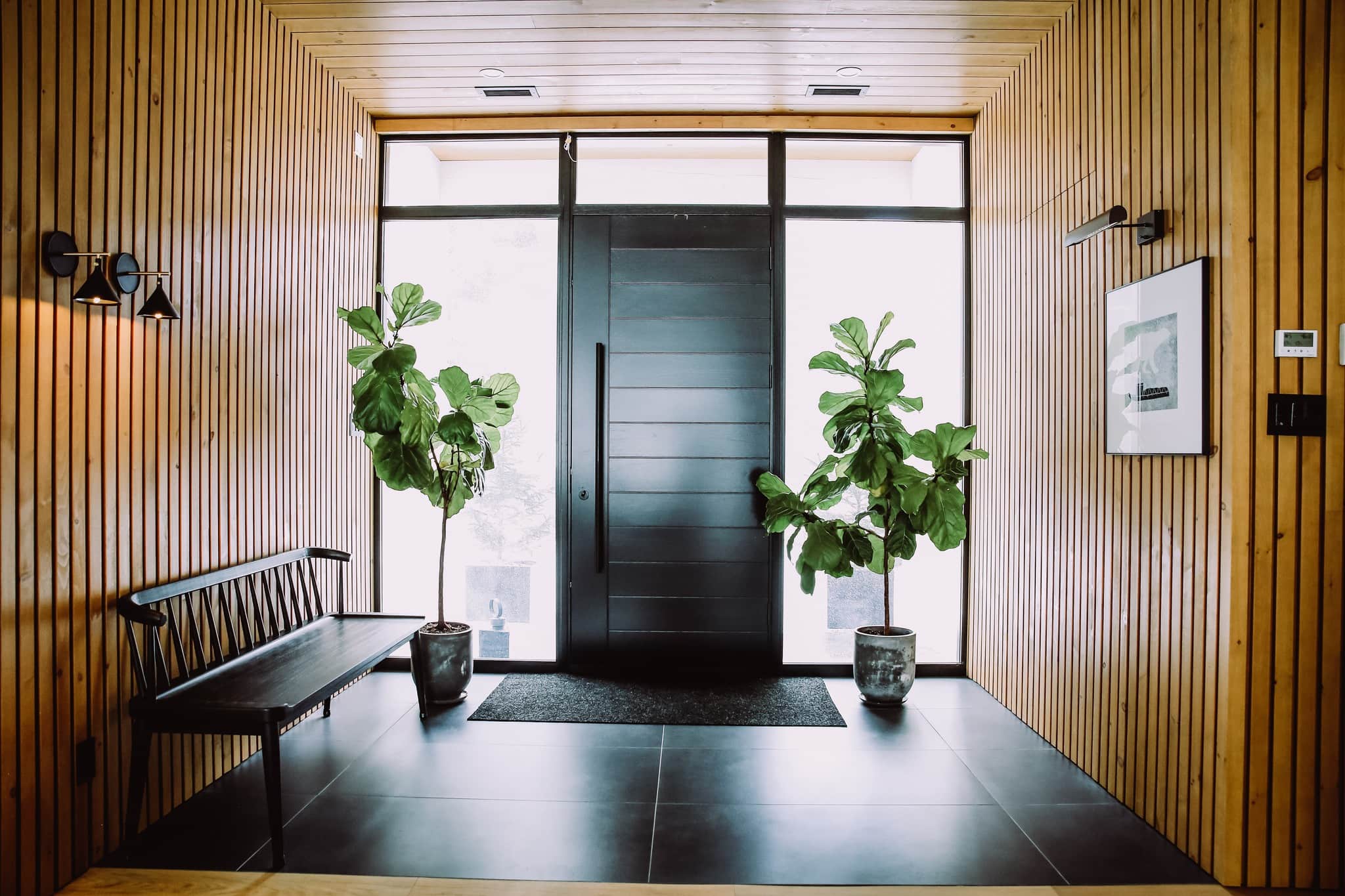
The installation of a wooden exterior siding requires careful preparation. This step is important to prepare the surface to be covered, but also to ensure the protection of the materials before and during the work. All sidings manufactured by Group SIDEX are covered by a 50-year guarantee against rot — provided every stage of the project complies with the instructions given by Group SIDEX at the time of purchase.
Preparing for a wood siding installation comes down to three steps: inspect and store the materials properly (dry, ventilated, 15 cm off the ground, under waterproof canvas if outside), gather the right tools (pneumatic nailer, levels, saws, moldings), and prepare the surface (flatness, compliant flashings and weather screens, furring). Done right, Sidex sidings carry a 50-year guarantee against rot.
How should construction materials be received and stored?
Before starting an exterior siding project, designate and clear a suitable place for the storage of materials before and during the work.
- Inspect on receipt: check the condition of all materials and contact the manufacturer if any items are damaged or missing — warranties do not cover sidings damaged before or during installation.
- Install quickly: to prevent the siding from deforming during storage, SIDEX experts recommend installing it as soon as possible after receipt.
- Store properly: a dry, ventilated area, free of sudden temperature or humidity changes, with materials kept 15 cm off the ground.
- Outdoors: the package must absolutely be kept under a waterproof canvas, even on sunny days.
Which tools are necessary for the installation?
In addition to checking the color and quantity of siding and finish, these tools are essential for an optimal installation:
- Metal starter moldings and metal finishing moldings for the top of the walls
- Mosquito nets
- Recommended staples or nails, with a pneumatic nailer or stapler
- Laser level and manual level
- Miter saw, circular saw and finishing blade
- Sheet metal bending machine and sheet metal chisel
- Hammer with plastic tip
- Fine brush or applicator
How should the surface be prepared?
- Check flatness — the surface must have good general flatness; significant unevenness makes the siding wear out more quickly, so make the necessary adjustments first.
- Verify flashings and weather screens — they must be in good condition and comply with applicable codes, to prevent damage caused by water infiltration.
- Install the furring — the strapping the siding attaches to. Its dimensions and arrangement vary with the siding's dimensions and profile. Furring is generally made of SPF slats (spruce, jack pine, fir) or plywood; larger buildings may use steel furring.
If you have an exterior siding project in mind, please contact us. Our experts will guide you to the siding that best suits your situation, budget and aesthetic preferences.
Frequently asked questions
How long is Sidex wood siding guaranteed?
All sidings manufactured by Group SIDEX are covered by a 50-year guarantee against rot, provided the owner ensures that all stages of the project comply with the instructions given by Group SIDEX at the time of purchase.
How should wood siding be stored before installation?
Store the siding in a dry, ventilated area not subject to sudden changes in temperature or humidity, at least 15 cm off the ground. If stored outside, it must be kept under a waterproof canvas at all times, even on sunny days. Install as soon as possible after receipt.
What should I check when the siding is delivered?
Check the condition, color and quantity of all materials upon receipt and contact the manufacturer if any items are damaged or missing. Warranties do not cover sidings damaged before or during installation.
What tools are needed to install exterior wood siding?
Key tools include a pneumatic nailer or stapler with recommended staples or nails, laser and manual levels, miter and circular saws, a finishing blade, a sheet metal bending machine and chisel, a plastic-tip hammer, metal starter and finishing moldings, mosquito nets, and a fine brush or applicator.
How should the surface be prepared before installation?
The surface must have good general flatness — significant unevenness accelerates siding wear. Flashings and weather screens must be in good condition and code-compliant to prevent water infiltration. Furring (SPF slats, plywood, or steel on larger buildings) is then installed to receive the siding.
Let's discuss your siding project
Our experts will answer your questions and guide your choice. No obligation. 100% free.